River Rock Sizes Explained: Which One Should You Choose?
River rock is one of the most popular landscape materials for decorative beds, drainage areas, dry creek beds, water features, erosion control, and low-maintenance ground cover.
Each size has a different look, coverage style, and best use. Here’s what to know before choosing the right river rock for your project.
Why River Rock Size Matters
River rock size affects how the finished project looks, how easy the material is to spread, how well it handles water flow, and how stable it stays over time.
Choosing the right size can help:
- Improve drainage around downspouts, beds, and low areas
- Create a cleaner, more decorative landscape finish
- Reduce erosion and washout
- Build natural-looking dry creek beds
- Add texture around pools, patios, and outdoor spaces
- Reduce maintenance compared to mulch in certain areas
River Rock Size Types
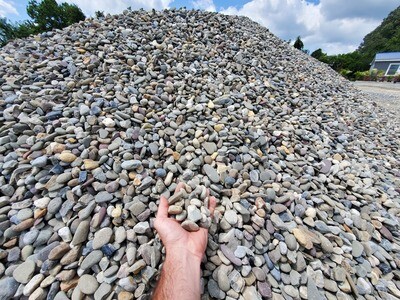
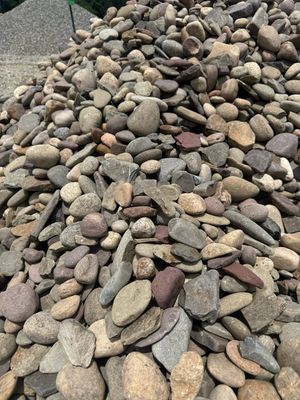
3/4" river rock is one of the smaller river rock options. It gives a clean decorative look while still allowing water to move through the stone.
Best For: Landscape beds, small drainage areas, edging, walkways, around plants, and decorative ground cover.
Look: Smaller, smoother, and easier to spread than larger river rock.
Drainage: Good drainage for lighter water flow areas.
Good to Know: This size is easier to work with by hand and works well where you want a clean, finished appearance without oversized stones.
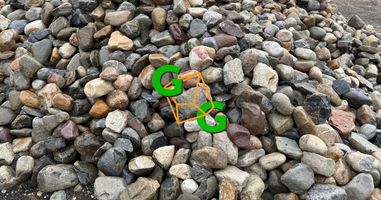
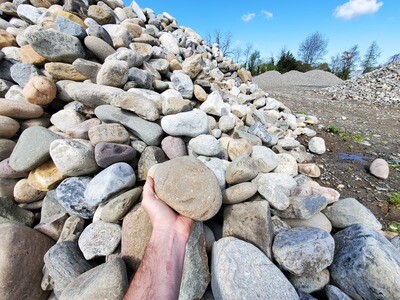
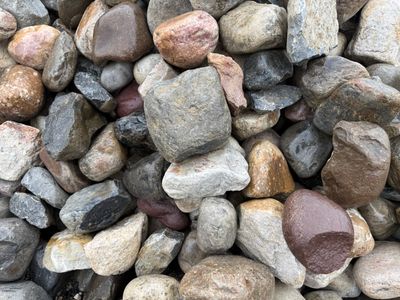
1–5" river rock is a popular mid-size option that works well for decorative beds, dry creek beds, drainage areas, and landscape features.
Best For: Dry creek beds, drainage swales, decorative landscape beds, pool areas, and larger ground cover projects.
Look: Natural, mixed-size appearance with more texture and dimension.
Drainage: Handles moderate water flow better than smaller decorative rock.
Good to Know: This is a strong choice when you want both function and a more natural riverbed-style look.
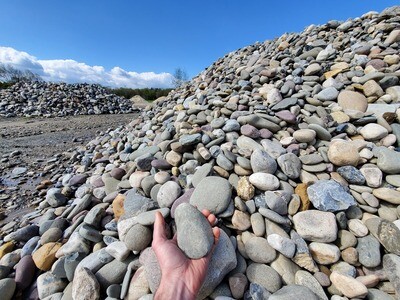
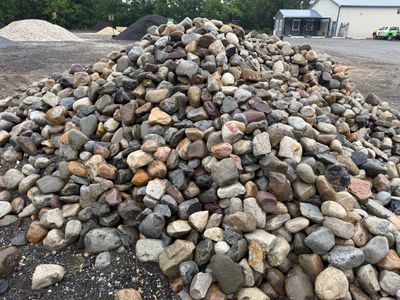
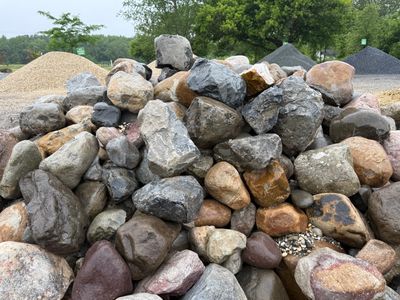
5–8" river rock is a larger decorative stone used when you want bigger visual impact and stronger erosion control.
Best For: Drainage channels, dry creek beds, slope protection, erosion-prone areas, and bold decorative accents.
Look: Larger, heavier, and more noticeable in the landscape.
Drainage: Good for heavier water movement and areas where smaller stone may shift.
Good to Know: This size is less likely to wash away than smaller rock and works well where water movement is a concern.
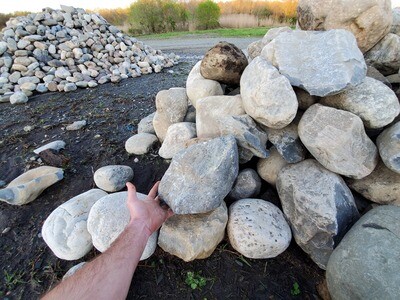
8–12" river rock is a large accent stone commonly used for statement areas, water features, and heavier erosion control.
Best For: Large dry creek beds, pond edges, water features, drainage outlets, slopes, and decorative boulder-style accents.
Look: Bold, natural, and highly visible.
Drainage: Excellent for areas with stronger water flow or washout concerns.
Good to Know: This rock is best used where you want a larger natural stone look rather than full ground coverage.
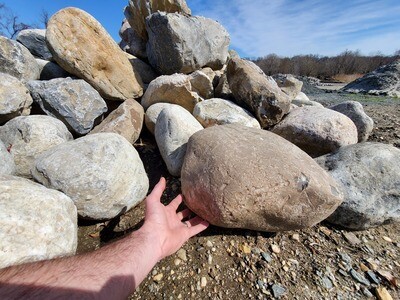
12–24" river rock is the largest river rock option and is used for major landscape accents, large drainage areas, and heavy-duty erosion control.
Best For: Large drainage swales, shoreline-style features, heavy erosion areas, landscape accents, dry creek beds, and natural boulder groupings.
Look: Large, bold, natural stone appearance.
Drainage: Best for strong water flow areas and places where smaller stone may move.
Good to Know: This size is not meant for easy hand spreading. It works best as a feature stone or in projects where larger stone is needed for stability.
How to Choose the Right River Rock
Choose smaller river rock for finished beds:
3/4" River Rock
is easier to spread and works well for decorative beds, edging, and smaller drainage projects.
Choose medium river rock for dry creek beds:
1–5" River Rock
gives a natural riverbed look and works well when you want both drainage and appearance.
Choose larger river rock for erosion control:
5–8",
8–12", and
12–24" River Rock
are better for slopes, heavy water movement, drainage outlets, and areas where smaller stone could wash away.
Think about the finished look:
Smaller river rock creates a cleaner ground-cover look. Larger river rock creates a bolder, more natural landscape feature.
Think about installation:
Smaller rock is easier to spread by hand. Larger rock may require more planning, equipment, or careful placement.
Common River Rock Projects
1. Landscape Beds
River rock is a low-maintenance option for landscape beds, especially around homes, pools, patios, and commercial properties. Smaller sizes like
3/4" River Rock
are often easier to spread and maintain in finished beds.
2. Dry Creek Beds
Dry creek beds look best when multiple sizes are used together. A mix of
1–5" River Rock,
5–8" River Rock, and larger accents can create a more natural streambed appearance.
3. Drainage Areas
River rock can help move water through drainage swales, downspout areas, and washout-prone sections. Larger stone is usually better when water flow is heavier.
4. Erosion Control
For slopes, drainage outlets, and areas where water moves quickly, larger options like
8–12" River Rock
or
12–24" River Rock
help reduce washout and keep material in place.
5. Water Features and Pond Edges
Larger river rock adds a natural look around ponds, waterfalls, drainage features, and decorative water areas. It can also help soften hard edges and blend the feature into the surrounding landscape.
Final Thoughts
The best river rock size depends on your project goal. Smaller river rock is easier to spread and works well for finished decorative beds. Medium river rock is great for dry creek beds and drainage areas. Larger river rock is best for erosion control, bold accents, and heavier water flow.
At Gibson Grounds Supply, we help homeowners, contractors, and property owners choose the right river rock size for the job and get it delivered.