Open Mon-Fri 7:30AM-4:30PM - Same Day Delivery 

Check out our new Blog Section in the Tool Shed! 

Emily Powers | 4 hours ago

Gravel vs Crusher Run

Trying to choose between gravel and crusher run? Gibson Grounds breaks down the differences, best uses, and costs so you can pick the right material for your driveway, base, or landscaping project.

Gravel vs Crusher Run: What to Use

Choosing between gravel and crusher run depends on your project, traffic level, drainage needs, and the finish you want.
Whether you're building a driveway, creating a walkway, installing a shed pad, or preparing a base for pavers, the right material makes a big difference.
Here’s a practical guide to help you choose the right material for driveways, walkways, drainage projects, parking areas, and outdoor foundations.

Why Material Choice Matters

Gravel and crusher run may look similar at first, but they perform very differently once installed. Choosing the wrong material can lead to shifting, poor drainage, rutting, or a base that does not hold up over time.
The right material helps:
  • Improve drainage
  • Create a stronger base
  • Reduce shifting and washout
  • Support vehicle or foot traffic
  • Give your project the right finished look

Material Types

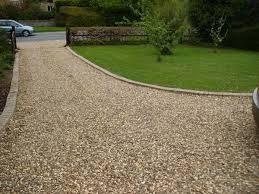
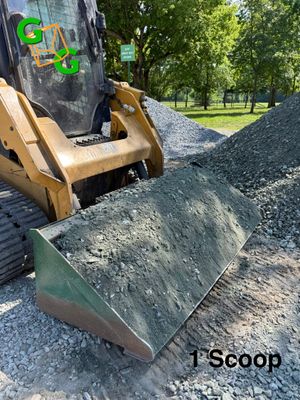
1. Stone Crusher Run (CR6)

Best For: Driveways, parking pads, shed bases, paver bases, and compacted foundations.
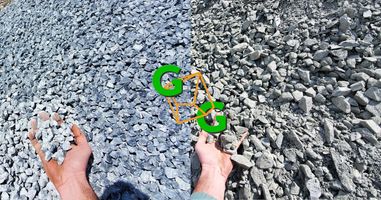
Compaction: Packs tightly because it contains both crushed stone and fines.
Drainage: Drains less freely than clean gravel because smaller particles fill gaps.
Finish: Creates a strong, stable surface once compacted.

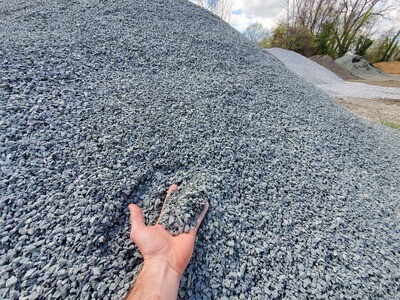
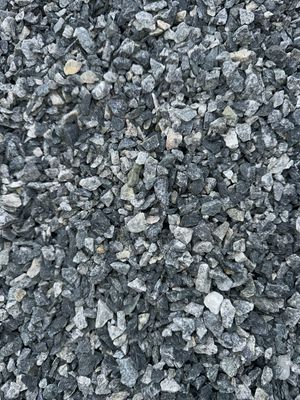
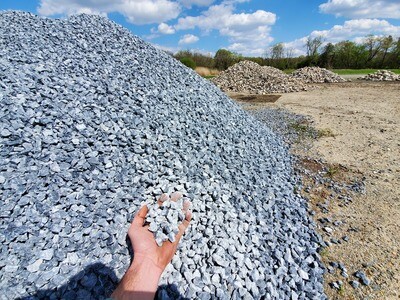
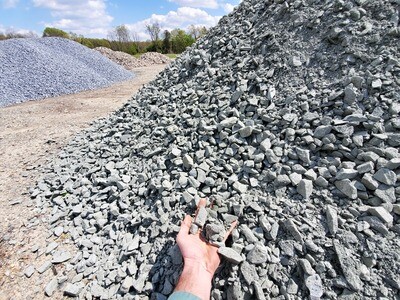
2. 3/4" Gray/Blue #57 Stone

Best For: Drainage, driveways, French drains, and general stone projects.
Compaction: Does not compact as tightly as crusher run.
Drainage: Allows water to move more freely.
Finish: Clean gray/blue appearance for functional and decorative areas.

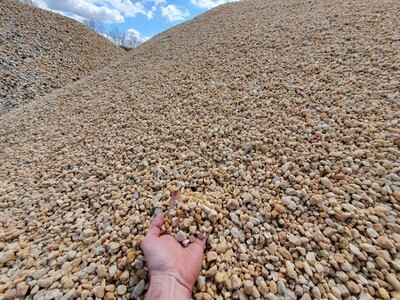
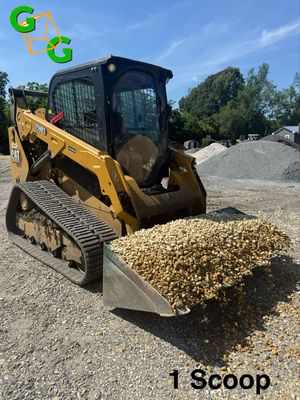
3. 3/4" Natural Gravel

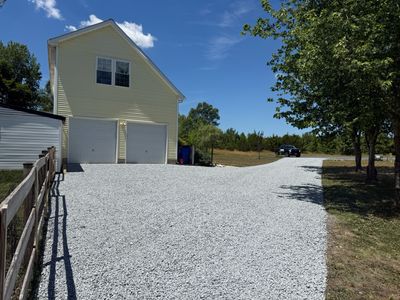
Best For: Driveways, drainage areas, landscape beds, and general ground cover.
Compaction: Remains looser than crusher run.
Drainage: Good drainage due to spacing between stones.
Finish: Natural and rustic appearance.

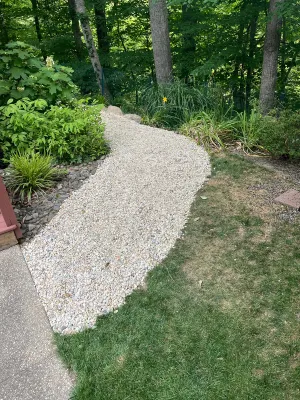
4. 1/2" Gray #8 Stone

Best For: Walkways, decorative areas, drainage applications, and concrete mixes.
Compaction: Stays looser than crusher run but settles nicely over time.
Drainage: Excellent drainage because it is a washed stone.
Finish: Cleaner, more refined decorative appearance.

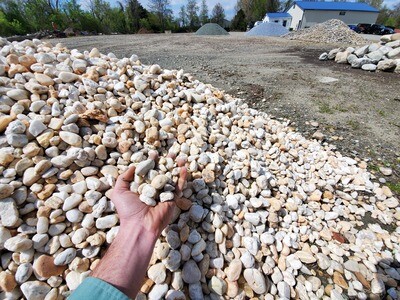
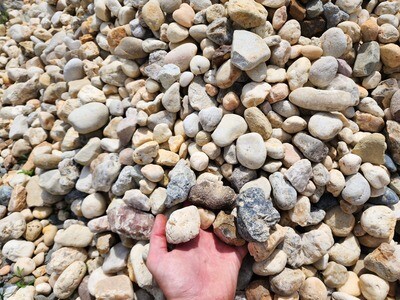
5. Pea Gravel

Best For: Walkways, decorative beds, playgrounds, and lighter-use spaces.
Compaction: Does not lock together tightly.
Drainage: Drains very well but shifts more under heavy traffic.
Finish: Smooth, decorative appearance.

Tips for Choosing the Right Material

Use crusher run for a strong base: If the area needs to support vehicles, sheds, trailers, or pavers, crusher run is usually the better choice.
Use gravel for drainage: Materials like #57 stone, #8 stone, and pea gravel help water move more easily.
Think about the finish: Gravel typically gives a cleaner decorative appearance while crusher run focuses more on strength and function.
Match the material to traffic: Heavy-use areas benefit from compactable material while decorative and low-traffic areas often work better with gravel.

Final Thoughts

Every project is different, but the simple rule is this: use crusher run when you need strength and compaction and gravel when you want better drainage or a cleaner decorative finish.
At Gibson Grounds, we help homeowners and contractors choose the right material for the job and get it delivered.
Need Help Choosing Material?
Shop materials online or estimate how much you need with our material calculator.
Shop Materials Material Calculator


P.S. If your driveway turns into a mud pit every time it rains or sounds like loose marbles under your tires, it’s probably time to stop guessing and get the right material. Whether you need crusher run that packs down hard or gravel that drains like it should, Gibson Grounds Supply will point you in the right direction. Because the only thing worse than buying stone once… is buying the wrong stone twice.

Emily Powers

More Posts

Mushroom Compost: Benefits & UsesMushroom Compost: Benefits & Uses
Mushroom Compost: Benefits & Uses

In this guide, we’ll break down what mushroom compost is, its benefits, the best ways to use it, recommended application amounts, and which projects benefit the most from adding compost to your soil.

Wood Chips: How to Choose the Right Type for Your ProjectWood Chips: How to Choose the Right Type for Your Project
Wood Chips: How to Choose the Right Type for Your Project

At Gibson Grounds, we provide multiple wood chip options for homeowners, contractors, farms, playgrounds, and commercial properties looking for dependable bulk ground cover materials.

River Rock Buyers GuideRiver Rock Buyers Guide
River Rock Buyers Guide

Not sure which river rock size to choose? Compare Gibson Grounds 3/4", 1–5", 5–8", 8–12", and 12–24" river rock for drainage, landscape beds, dry creek beds, erosion control, and decorative projects.

Contact Us

200 Wheels Rolling Farm Lane

Church Hill, MD, 21623

Mon–Fri: 7:30 AM — 4:30 PM

Sat: 8 AM — 12:00 PM


443-282-5912

sales@gibsongrounds.com